Procedures & Areas of Expertise

Advanced general, laparoscopic, robotic, and colorectal surgery delivered with careful assessment and patient-centred planning.

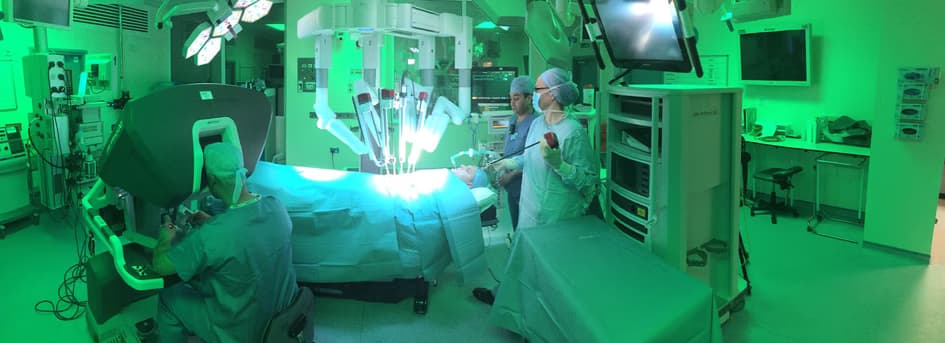
Panoramic view of a modern surgical theatre.
Modern theatre environment for advanced surgical care.

Individual Assessment

Treatment planning begins with understanding the patient

Every patient is assessed as an individual. Symptoms, medical history, previous investigations and personal circumstances all influence the most appropriate next step.

Treatment may include further investigation, monitoring, medical management, minimally invasive surgery, robotic surgery or referral to a broader multidisciplinary team where appropriate.

Procedure 01

Hernia Surgery

Professor Qureshi assesses and treats a range of hernias, including inguinal, ventral and incisional hernias. Treatment depends on the type of hernia, symptoms, medical background and individual suitability for surgery.

  • Inguinal hernia
  • Ventral hernia
  • Incisional hernia
  • Laparoscopic hernia repair
  • Careful assessment of symptoms and suitability for surgery

Inguinal hernia repair

A short procedural video related to inguinal hernia repair and minimally invasive surgical principles.

Ventral and incisional hernia repair

A surgical education video connected with ventral and incisional hernia repair.

Procedure 02

Gallstones & Gallbladder Surgery

Gallstones are common and may cause pain, nausea, inflammation or more serious complications. Where surgery is appropriate, laparoscopic or robotic gallbladder removal may be considered.

  • Gallstones and biliary pain
  • Gallbladder inflammation
  • Procedure: cholecystectomy
  • Laparoscopic or robotic surgery where suitable

Cholecystectomy

A procedural video relating to gallbladder removal for selected patients with gallstone disease.

Procedure 03

Inflammatory Bowel Disease Surgery

Surgery for Crohn's disease or ulcerative colitis may be considered when symptoms, complications or disease progression are not adequately controlled by medical treatment.

  • Selected Crohn's disease cases
  • Selected ulcerative colitis cases
  • Close working with gastroenterologists
  • Surgery considered after non-surgical options where appropriate

Arrange an Assessment

To discuss this condition with Professor Qureshi, contact the private clinic to arrange a consultation.

Book a Consultation

Procedure 04

Haemorrhoids & Rectal Bleeding

Rectal bleeding should always be assessed properly. Haemorrhoids can cause bleeding, discomfort, itching, swelling or prolapse, and treatment depends on clinical findings.

  • Rectal bleeding assessment
  • Haemorrhoids
  • Discomfort, itching or prolapse
  • THD or HALO where suitable

Haemorrhoids and rectal bleeding

A video resource relating to assessment and treatment options for haemorrhoids and rectal bleeding.

Procedure 05

Endoscopy & Bowel Cancer Screening

Endoscopy allows direct assessment of the bowel and can help investigate symptoms, support bowel cancer screening and identify polyps, inflammation or bleeding sources.

  • Colonoscopy
  • Flexible sigmoidoscopy
  • Investigation of bowel symptoms
  • Bowel cancer screening
  • Polyp detection and removal where appropriate

Endoscopy and bowel cancer screening

A video resource explaining endoscopy and its role in investigating bowel symptoms and screening.

Procedure 06

Diverticular Disease

Diverticular disease may require assessment when symptoms are recurrent, complicated or significantly affecting quality of life.

  • Diverticular disease assessment
  • Recurrent diverticulitis
  • Complicated diverticular disease
  • Surgery in selected cases

Diverticular disease

A patient education video relating to diverticular disease and selected treatment pathways.

Procedure 07

Bowel Resections, Colorectal & Bowel Cancer Surgery

Professor Qureshi has extensive experience in colorectal surgery, including bowel resections for benign and malignant disease. Surgical care for bowel cancer is planned within a multidisciplinary team and tailored to the individual diagnosis, staging, overall health and suitability for minimally invasive or robotic techniques.

  • Laparoscopic colorectal surgery
  • Robotic colorectal surgery
  • Bowel cancer surgery
  • Multidisciplinary team planning
  • Enhanced recovery pathways
  • Coordinated follow-up care

Colon resection

A procedural video relating to bowel resection and colorectal surgery.

Procedure 08

Endometriosis Surgery

Complex endometriosis may involve the bowel or surrounding pelvic structures and often requires collaboration between gynaecology, colorectal surgery and other specialists.

  • Bowel involvement in endometriosis
  • Advanced laparoscopic approaches
  • Multidisciplinary planning
  • Individualised surgical assessment

Arrange an Assessment

To discuss this condition with Professor Qureshi, contact the private clinic to arrange a consultation.

Book a Consultation

Procedure 09

Adhesions

Adhesions can occur after previous surgery or inflammation. In carefully selected cases, keyhole surgery to divide adhesions may be discussed after thoughtful assessment.

  • Adhesions after previous surgery
  • Pain or bowel symptom assessment
  • Keyhole surgery in selected cases
  • Careful discussion of risks and expectations

Adhesions

A video resource relating to adhesions and the role of careful surgical assessment.

Procedure 10

Pilonidal Sinus

Pilonidal sinus disease can cause pain, swelling, discharge or recurrent infection. Depending on findings, the Modified Karydakis Technique may be considered as one possible approach.

  • Pilonidal sinus assessment
  • Recurrent infection
  • Surgical treatment
  • Modified Karydakis Technique where suitable

Arrange an Assessment

To discuss this condition with Professor Qureshi, contact the private clinic to arrange a consultation.

Book a Consultation

Medical information disclaimer

This website provides general information only and does not replace a medical consultation. Suitability for treatment can only be assessed after a full clinical review, including symptoms, medical history, examination and relevant investigations. If you have urgent symptoms, seek urgent medical advice.

Not sure which treatment you need?

If you are experiencing symptoms or have been advised that you may need surgical assessment, a private consultation can help clarify the diagnosis, review available options and guide the next step in your care.

Book a Private Consultation