Private Hernia Surgery in Dorset
Professor Tas Qureshi provides private hernia assessment and laparoscopic hernia repair for patients from Poole, Bournemouth, Christchurch and across Dorset at The Harbour Hospital, Poole.
Hernia Surgery Dorset
Consultant hernia surgeon for patients across Dorset
Professor Tas Qureshi is a Consultant General Surgeon with experience in laparoscopic, robotic and open surgical techniques. He sees private patients at The Harbour Hospital in Poole, where he provides specialist assessment and treatment for a range of hernia types including inguinal, femoral, umbilical, paraumbilical, ventral and incisional hernias.
Following examination and review of any available investigations, Professor Qureshi discusses all management options with each patient. Treatment may involve observation, further imaging, open repair or laparoscopic (keyhole) repair, depending on the hernia type, symptoms and individual circumstances. The decision about whether and when to operate is made collaboratively, with the patient's priorities and clinical situation both considered.
Private consultations are available at The Harbour Hospital, St Mary's Road, Poole, BH15 2BH. Self-pay and insured patients are both welcome.
Hernias assessed and treated
- Inguinal hernia (groin hernia)
- Femoral hernia (upper inner thigh)
- Umbilical and paraumbilical hernia
- Ventral hernia (abdominal wall)
- Incisional hernia (through a surgical scar)
- Recurrent hernia
Clinic location
The Harbour HospitalSt Mary's RoadPoole, BH15 2BHAccessible from Bournemouth, Christchurch, Wimborne and across Dorset.
Secretary: Ms Lesley Blackley
Serving Dorset
Private hernia surgery in Poole for patients from across Dorset
The Harbour Hospital in Poole is centrally located for patients from across the county. Whether you are based in Bournemouth, Christchurch, Wimborne, Ferndown, Wareham, Swanage, Dorchester or the wider Dorset area, a private hernia consultation with Professor Qureshi is straightforward to access.
Many patients find that accessing private care means a shorter wait for assessment and a clear, unhurried consultation in which all options can be discussed. Professor Qureshi provides consultant-led care throughout — from the initial assessment, through any surgical procedure, to post-operative follow-up where required.
If you are unsure whether The Harbour Hospital is the right location for you, please contact the clinic secretary who will be happy to help with directions, parking and transport information.
Hernia Types
Types of hernia treated
Hernias are assessed individually. The type of hernia, the nature of symptoms and the patient's overall health all influence the discussion about management and whether surgical repair is appropriate.
Inguinal hernia
An inguinal hernia occurs when tissue — often part of the intestine — pushes through a weak point in the abdominal muscles into the inguinal canal in the groin. It is the most common type of hernia and can affect men and women, though it is more frequent in men. Symptoms may include a visible lump in the groin, discomfort on bending or lifting, and a dragging or heavy sensation.
Femoral hernia
A femoral hernia develops when tissue passes through the femoral canal, just below the inguinal ligament in the upper inner thigh. Femoral hernias are less common than inguinal hernias and are more often seen in women. Because the femoral canal is narrow, this type of hernia carries a higher risk of becoming trapped and may require surgical repair even if symptoms are mild.
Umbilical and paraumbilical hernia
An umbilical hernia occurs when abdominal contents protrude through or near the umbilicus (belly button). Paraumbilical hernias arise just above or below the navel. They may be present from birth or develop in adulthood, particularly following pregnancy, obesity or raised intra-abdominal pressure. Many umbilical hernias are managed with observation, with surgery considered when symptoms develop or the hernia enlarges.
Ventral hernia
A ventral hernia is a broad term for any hernia through the abdominal wall that is not in the groin. This includes umbilical, paraumbilical, epigastric and other midline or lateral abdominal wall hernias. They typically present as a lump or bulge in the abdomen and may cause discomfort, particularly with physical activity or prolonged standing.
Incisional hernia
An incisional hernia develops through the scar of a previous abdominal surgical incision. The abdominal wall may be weakened in the area of the scar, allowing contents to protrude over time. Incisional hernias can vary considerably in size and complexity. Repair may involve laparoscopic or open techniques, with or without mesh, depending on individual circumstances.
Recurrent hernia
A recurrent hernia occurs when a previously repaired hernia returns. This can happen after any type of hernia repair and may be more complex to manage than a primary hernia. Assessment will include a review of the previous surgery, the type of repair performed and current symptoms. Operative planning is tailored carefully to the individual situation.
Surgical Techniques
Laparoscopic hernia repair
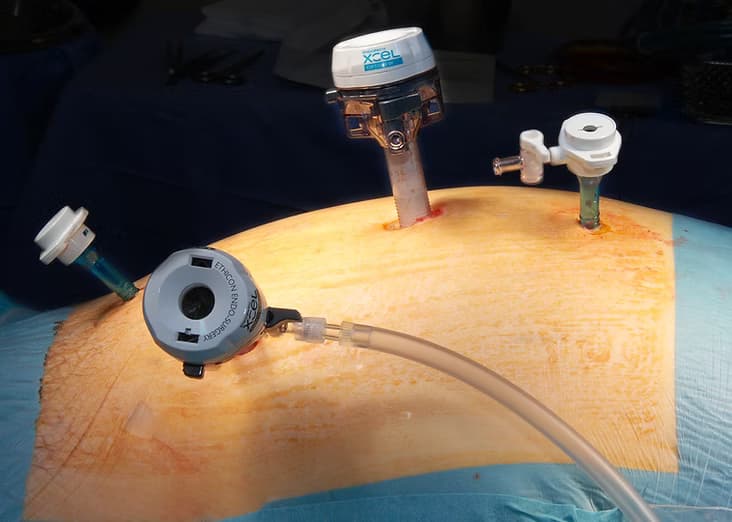
Laparoscopic hernia repair — often referred to as keyhole surgery — uses small incisions, a camera (laparoscope) and specialised instruments to repair the hernia without the need for a large open wound. In suitable cases, this approach may reduce post-operative discomfort and allow a faster return to normal activities compared to open repair, though outcomes depend on the individual.
For inguinal hernia repair, two laparoscopic techniques are commonly used: TEP (Totally Extra-Peritoneal), in which the repair is carried out without entering the abdominal cavity, and TAPP (Trans-Abdominal Pre-Peritoneal), which approaches the hernia from within the abdomen via small ports. The choice between these is based on the hernia anatomy, any previous surgery and clinical assessment.
Mesh reinforcement is used in many laparoscopic hernia repairs to support the abdominal wall and reduce the likelihood of recurrence. Whether mesh is appropriate is discussed as part of the consent process before any procedure is agreed.
Not every patient is a suitable candidate for laparoscopic repair. Suitability is assessed individually, taking into account the hernia type, previous surgery and overall health. The approach that is most appropriate for you will be discussed openly during consultation.
Laparoscopic approach — overview
- Small incisions — typically less than one centimetre
- Camera (laparoscope) used to view the hernia internally
- Hernia reduced and defect repaired with mesh where appropriate
- TEP or TAPP technique for inguinal hernias
- General anaesthetic required
- Day-case or short-stay admission for many patients
- Suitability assessed individually at consultation
Surgical Techniques
Open hernia repair
Open hernia repair involves a single incision made directly over the hernia, through which the protruding tissue is returned to its correct position and the abdominal wall is repaired, usually with mesh reinforcement. It is a well-established surgical technique that remains appropriate for many patients and hernia types.
There are clinical situations in which open repair may be preferred or more appropriate than a laparoscopic approach. These include certain hernia types, patients who have had previous surgery in the same area, hernias that are large or complex, or cases where the risks of general anaesthesia and laparoscopy need to be balanced against other factors.
The decision between open and laparoscopic repair is made after a full clinical assessment. Professor Qureshi will explain the options, the likely approach he would recommend and the reasons for that recommendation, giving you the opportunity to ask questions before any decision is confirmed.
Factors that may favour open repair
- Hernia type or anatomy not suited to laparoscopic approach
- Previous surgery in the same region
- Large or recurrent hernia requiring complex repair
- Symptom pattern or examination findings
- Individual health factors or anaesthetic considerations
- Clinical judgement following full assessment
Seeking Help
When should you seek help for a hernia?
Many patients live with a hernia for a period of time before seeking assessment. If you have noticed a lump, discomfort or a change in symptoms, a private consultation allows a thorough examination and a clear discussion of whether and when treatment may be needed.
Signs worth discussing with a surgeon
- A visible lump or bulge that appears on standing or straining
- Pain or discomfort, particularly on lifting, bending or physical exertion
- A hernia that is enlarging over time
- Symptoms that are affecting daily activities or quality of life
- Discomfort that does not settle with rest
- Uncertainty about whether what you have noticed is a hernia
Urgent warning signs
If you experience any of the following symptoms, seek urgent medical attention immediately — do not wait for a routine appointment:
- Sudden, severe or rapidly worsening pain at the hernia site
- Redness, heat or swelling over the hernia
- A hernia that cannot be pushed back in (irreducible)
- Nausea or vomiting alongside hernia pain
- Feeling acutely unwell or feverish
These symptoms may indicate hernia strangulation, which requires emergency treatment. Call 999 or attend your nearest emergency department.
Why Choose Private
Why choose Professor Tas Qureshi?
Professor Qureshi brings together NHS and private surgical experience, specialist training in minimally invasive techniques and a commitment to consultant-led care throughout each patient's journey.
Consultant General Surgeon
Professor Qureshi is a fully qualified Consultant General Surgeon holding FRCS (Eng) and FRCS (Gen Surg) fellowships. He has held an NHS consultant post since 2009 and conducts private practice at The Harbour Hospital in Poole.
Specialist in minimally invasive surgery
Professor Qureshi has specialist experience in laparoscopic and robotic surgery. He is one of a small number of surgeons in Dorset with robotic surgery experience, and applies minimally invasive techniques where appropriate for hernia repair.
National and international teaching
Professor Qureshi was appointed a National Trainer in Laparoscopic Surgery in 2011 and has been involved in surgical education and training at national and international level. He has contributed to the development of surgical simulation and robotic surgery programmes.
Consultant-led care throughout
From your first private consultation to any follow-up after surgery, your care is led by Professor Qureshi directly. You will see the same consultant at each stage, with continuity that private practice is designed to provide.
Self-pay and insured patients welcome
Private hernia surgery at The Harbour Hospital is available on a self-pay basis or through most recognised private medical insurance providers. The clinic secretary can advise on fees and insurance requirements before your appointment.
Accessible for Dorset patients
The Harbour Hospital in Poole is well located for patients from across Dorset. Parking is available on site, and the hospital is accessible from Bournemouth, Christchurch, Wimborne, Wareham and surrounding areas.
Your Journey
What to expect
A private hernia consultation is an opportunity to have your symptoms assessed by a consultant surgeon, ask questions and understand your options before any decision about treatment is made.
1. Initial consultation
Professor Qureshi will take a full clinical history, including how long the hernia has been present, what symptoms you are experiencing and how it affects your daily life. You will be asked about any relevant previous surgery, medical conditions and medications.
2. Clinical examination
The hernia will be examined to assess its size, type, reducibility and whether it is causing any complications. Examination findings help inform the discussion about whether surgery is likely to be beneficial and which approach may be most appropriate.
3. Review of investigations
If you have had relevant imaging — such as an ultrasound or CT scan — or any previous surgical reports, these will be reviewed. If further investigation is needed before a decision is made, this will be arranged and explained.
4. Discussion of options
Professor Qureshi will explain the findings and discuss the options available, which may include observation, further investigation or surgical repair. The risks and benefits of each option will be explained, and there is no pressure to commit to any course of action at the consultation.
5. Surgical planning
If surgery is agreed upon, the surgical approach, the use of mesh, anaesthetic arrangements and the expected post-operative course will be discussed. Pre-operative assessment will be arranged and any outstanding questions answered before the procedure.
6. Post-operative follow-up
Follow-up is arranged where clinically appropriate after hernia surgery. Professor Qureshi will review your recovery, answer any concerns and advise on the return to normal activities, work and exercise.
Common Questions
Hernia surgery Dorset — frequently asked questions
Can I have private hernia surgery in Dorset?+
Yes. Professor Tas Qureshi performs private hernia surgery at The Harbour Hospital in Poole, Dorset. The hospital is easily accessible for patients from across the county, including Bournemouth, Christchurch, Wimborne, Ferndown, Wareham and surrounding areas. Both self-pay patients and those with private medical insurance are welcome.
Does Professor Qureshi treat patients from Bournemouth?+
Yes. Professor Qureshi regularly sees patients from Bournemouth and the surrounding area at The Harbour Hospital in Poole, which is a short distance from Bournemouth town centre. A private consultation can be arranged by contacting the clinic secretary.
What types of hernia does Professor Qureshi treat?+
Professor Qureshi assesses and treats inguinal hernias (groin hernias), femoral hernias, umbilical and paraumbilical hernias, ventral hernias (abdominal wall hernias), incisional hernias (through a previous surgical scar) and recurrent hernias. Each case is assessed individually to determine the most appropriate management.
What is laparoscopic hernia repair?+
Laparoscopic hernia repair is a minimally invasive technique in which the hernia is repaired through small incisions using a camera and specialised instruments. It avoids the need for a large open incision and may be suitable for certain hernia types and patient circumstances. Whether a laparoscopic approach is appropriate is assessed at consultation.
What is the difference between TEP and TAPP?+
TEP (Totally Extra-Peritoneal) and TAPP (Trans-Abdominal Pre-Peritoneal) are two laparoscopic approaches used for inguinal hernia repair. In TEP, the surgeon works outside the abdominal cavity without entering it. In TAPP, the repair is carried out from within the abdominal cavity using a small camera and instruments. The choice between techniques depends on the type of hernia, anatomy and clinical judgement, and will be discussed during your consultation.
Will I need mesh for hernia repair?+
Mesh is commonly used in hernia repair to reinforce the abdominal wall and reduce the likelihood of recurrence. Whether mesh is appropriate for your specific case will be discussed at consultation and depends on the type of hernia, the surgical approach used and individual clinical factors. Not every hernia repair requires mesh.
Is open or laparoscopic hernia surgery better?+
Neither approach is universally better — the most appropriate method depends on the type of hernia, the patient's history, any previous abdominal surgery, overall health and the surgeon's clinical assessment. Both approaches are safe when performed by an experienced surgeon. Professor Qureshi will discuss which option is most suitable for your individual situation.
How long does recovery take after hernia surgery?+
Recovery depends on the type of hernia repaired, the surgical approach used and individual factors such as age and general health. Many patients undergoing laparoscopic hernia repair are able to return to light activities within a week or two. Return to more strenuous activity or physically demanding work takes longer and is discussed individually. Expected recovery timelines will be explained at your consultation and post-operatively.
Can I use private medical insurance?+
Yes. Professor Qureshi is recognised by most major private medical insurers. If you have private health insurance, please check your policy terms and obtain any necessary pre-authorisation before your appointment. The clinic secretary can advise on the process and help confirm whether your insurer covers treatment.
Do all hernias need surgery?+
Not all hernias require immediate surgery. The decision to operate depends on the type of hernia, the presence and severity of symptoms, the risk of complications such as strangulation, and the patient's overall health. In some cases, a period of observation or further investigation is appropriate before any surgical decision is made. Professor Qureshi will carry out a thorough assessment and discuss all options with you.
When is a hernia urgent?+
A hernia may require urgent medical attention if it becomes irreducible (cannot be pushed back in), or if you develop severe or sudden-onset pain, redness and swelling over the hernia, nausea, vomiting or signs that you are acutely unwell. These symptoms may suggest strangulation — where the blood supply to the trapped tissue is compromised — which requires emergency treatment. If you develop these symptoms, seek emergency medical care without delay.
How do I book a private consultation?+
To arrange a private hernia consultation with Professor Qureshi, please contact the clinic secretary, Ms Lesley Blackley, by telephone on 07793 259914 or by email at lesley.blackley@circlehealthgroup.co.uk. Appointments are held at The Harbour Hospital, St Mary's Road, Poole, BH15 2BH. You can also submit an enquiry using the online contact form on this website.
Related Page
Private Hernia Surgery in Poole
View the dedicated Poole hernia surgery page for further detail on surgical approaches and procedures.
Medical information disclaimer
This page provides general information only and does not replace a medical consultation. Suitability for treatment can only be assessed after a full clinical review. If you have urgent or worsening symptoms, seek urgent medical attention.
Book private hernia surgery in Dorset
Professor Qureshi sees private patients at The Harbour Hospital, St Mary's Road, Poole, BH15 2BH. Contact the clinic secretary to arrange a consultation. Self-pay and insured patients welcome.